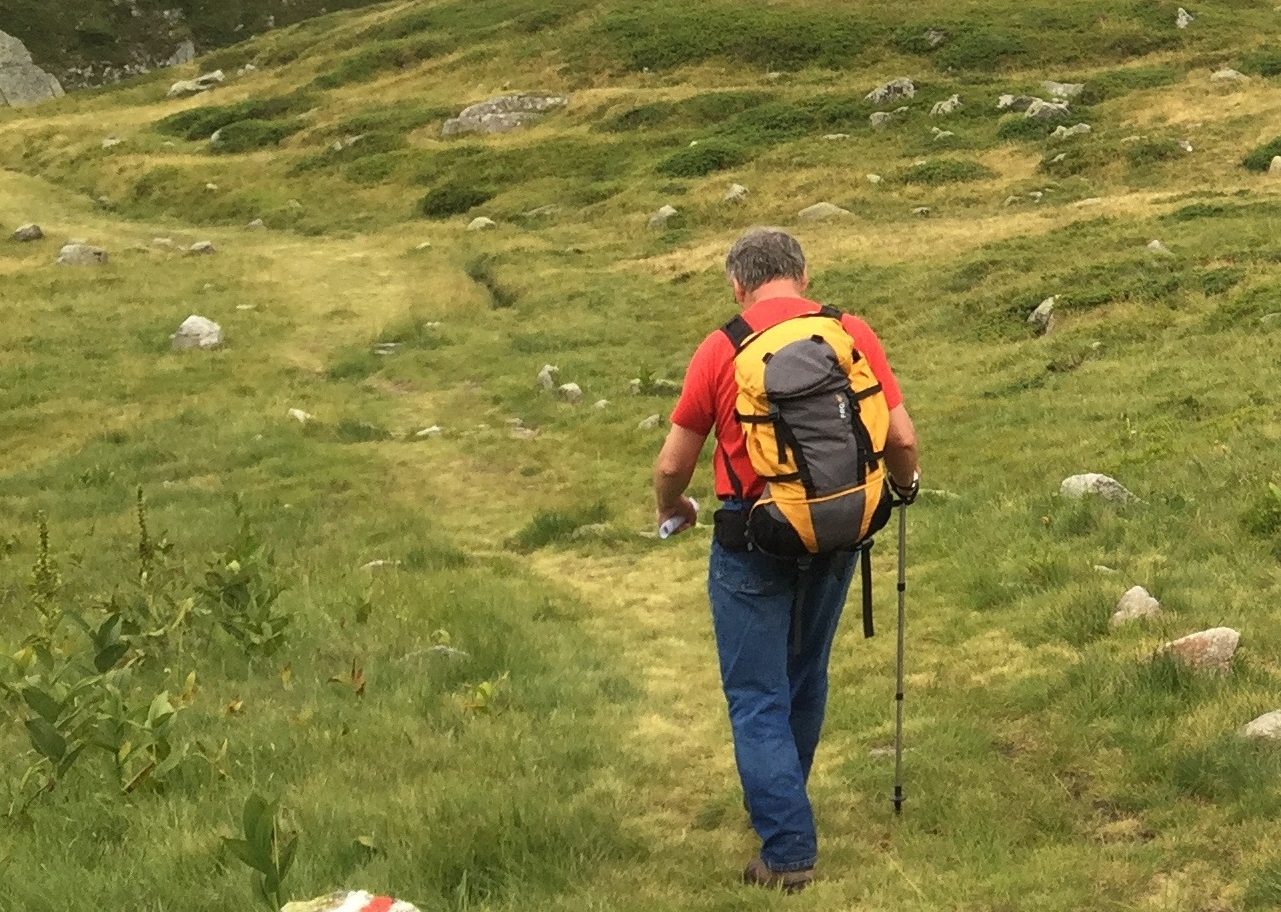
The next morning, I was up early and after a hearty breakfast, I was on my way.
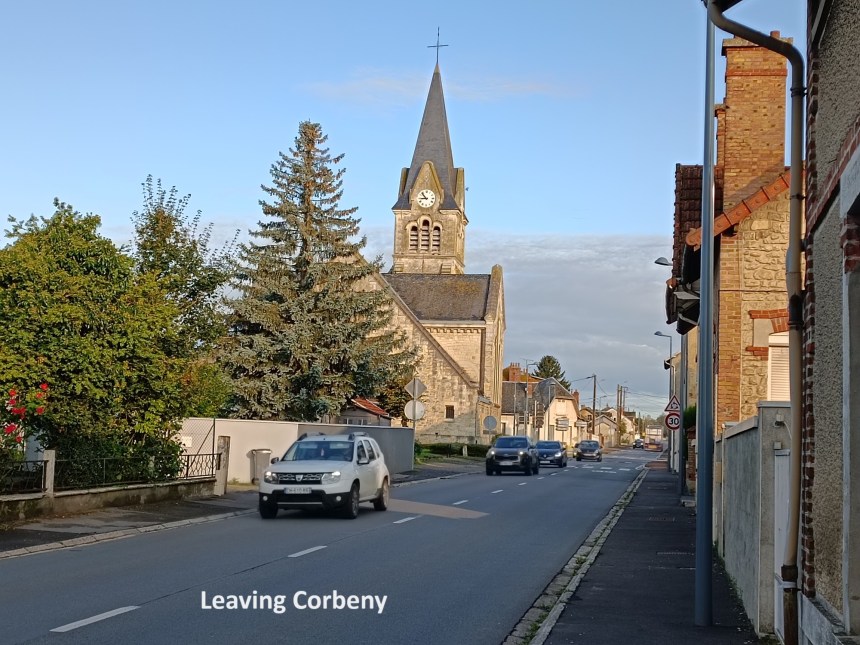
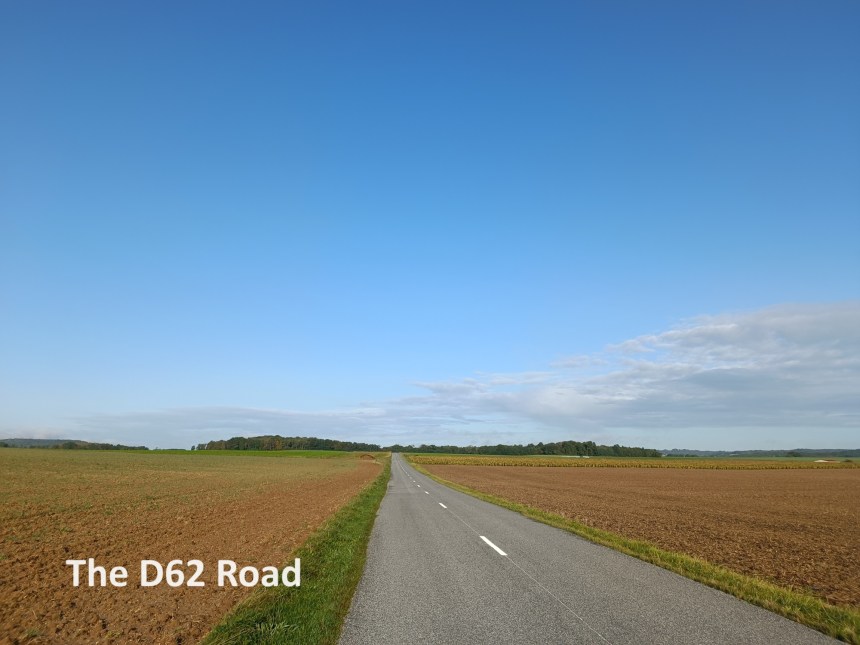
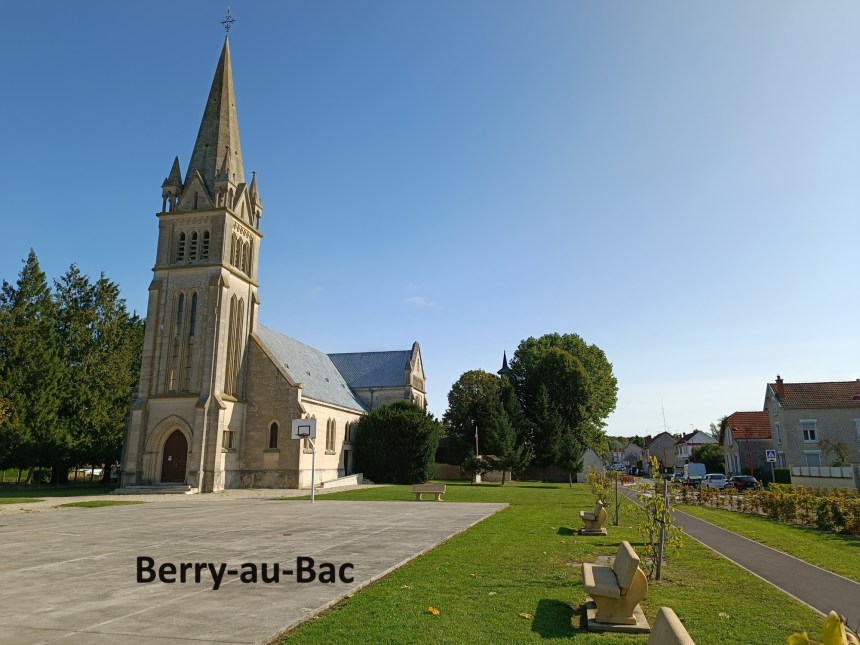
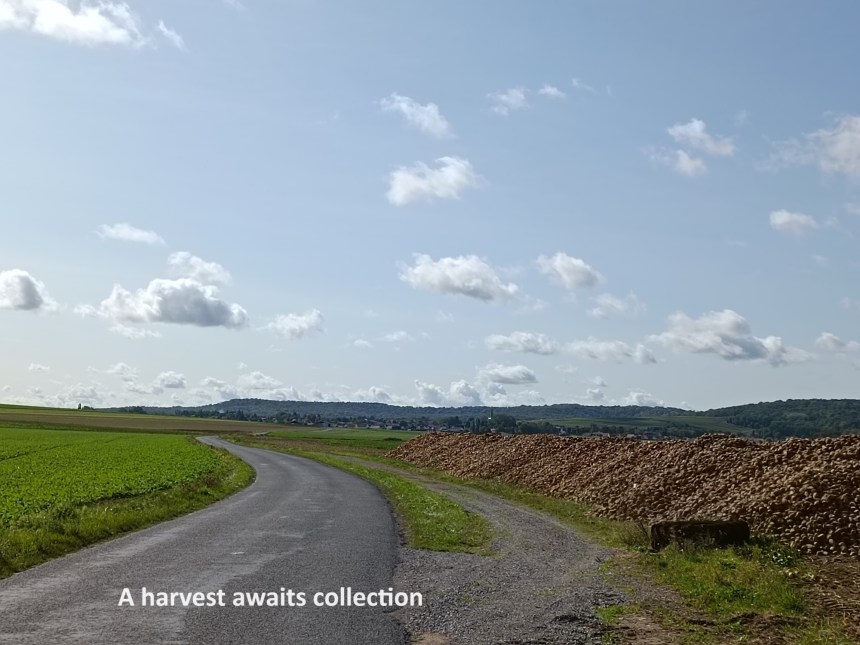
The guidebook says that after Corbeny, the terrain becomes a little flatter. It had already seemed quite flat to me. The main road through Corbeny goes in a dead straight line to the next village, Berry-au-Bac. The trail takes a more scenic route, and I followed that. I left Corbeny under blue skies, and just a short distance outside the village took a side road, the D62. There are busy D roads and there are quiet D roads. This was one of the latter, and I enjoyed a peaceful walk in the early morning sunshine. The road brought me to Juvincourt-et-Damary. However, the trail does not go into that village, but passes down its western flank. Then the route takes to the fields, sweeping around in a curve to cross the D925. Or at least the official trail crosses the D925 to go around the eastern edge of Berry-au-Bac and come out at the southern end of the village. I chose to follow the D925 into the village, and then turn south along its main street. I was rewarded with a café, which was open, and provided a welcome beverage.
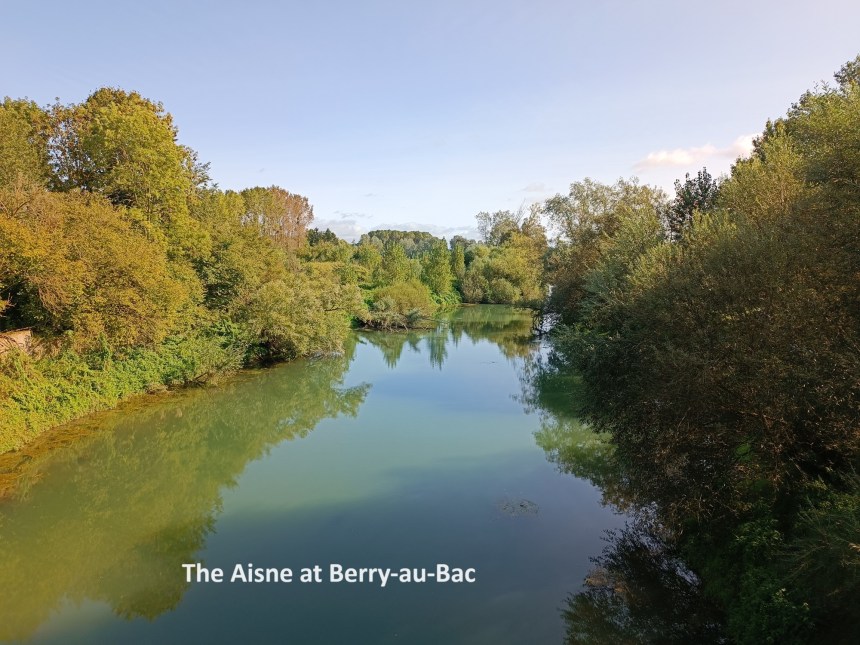
Going on Southwards, I crossed the Aisne at the southern end of Berry-au-Bac. This river gives its name to the department that I was walking through. The river is a tributary of the Oise, and is 356km long. In the nineteenth century it was canalised, the work finishing in the 1840s. The Canal Lateral a l’Aisne runs beside the river. The cancal still carries commercial traffic but is mostly used for leisure purposes.
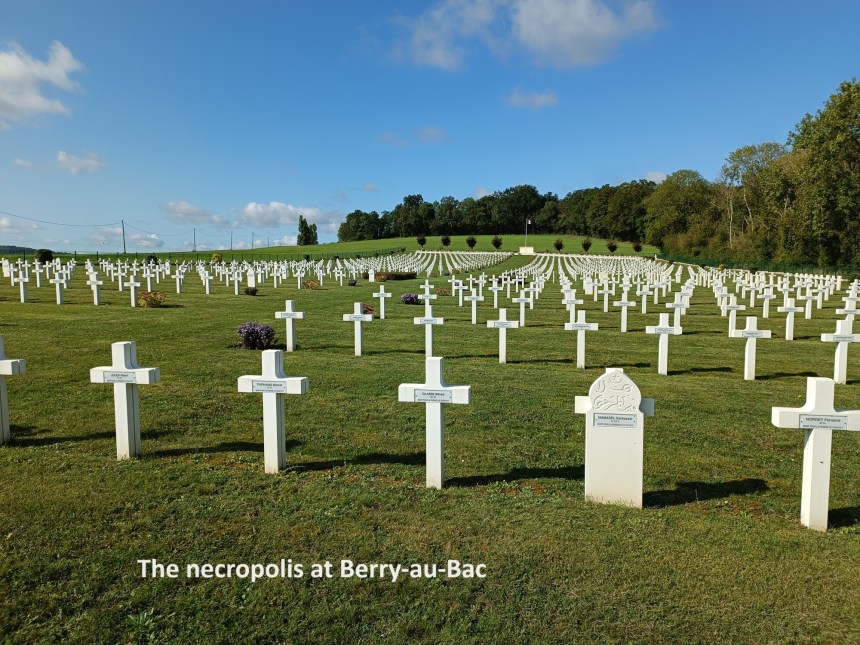
Just as I was leaving Berry-au-Bac, I took a short diversion to visit the Necropole National in the area. This is primarily a French cemetery. It contains the remains of 3972 soldiers and airmen from WW1, a little over half of that number in individual graves, and the remainder in ossuaries. Most of the graves are of men from the French army. In the case of the French graves, I was struck by the fact that several are in an oriental or middle-eastern style, prompting me to look at them more closely. They were Moroccan soldiers in French service. I was left wondering what prompts a man to leave his North-African homeland to go and fight for the colonial masters. Were they forced? But then I have to admit that many Irish did the same, fighting for the British Army, and leaving their bones in foreign soil. In those cases, surely Horace’s words of “dulce et decorum est pro patria mori” do not apply. There is also a small section containing twenty seven graves of British servicemen. And in their case, I was struck by the fact that in many of those cases, the identity is unknown. I was the only visitor while II was there. Although the place is immaculately kept, there was no one there laying flowers at the grave of a dead relative. There were just the bees and butterflies dancing on the flowers beside each row of graves. The bees and the butterflies know nothing of what happened in this area. They are lucky.

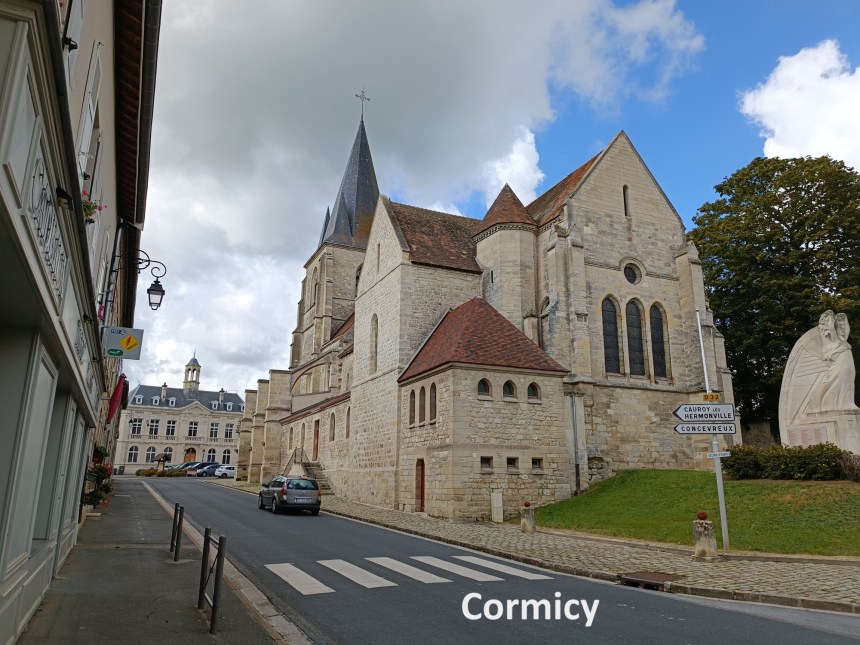
After the necropolis, I once again took a shortcut, following the road to the village of Cormicy. Cormicy was behind the allied lines in WW1, but was not immune to the effects of the war. On 27th August 1915, two shells hit the town, prompting people to take shelter. Several went to the Mairie, or town hall, and took refuge in the cellar. The third shell hit the building causing it to collapse. The shell was a gas shell. Rescuers rushed to the scene, pulling away the rubble, but all that was there when they reached the cellar was a heap of bodies. In all, twenty-two people were killed. Death and destruction was not confined to those in the trenches.
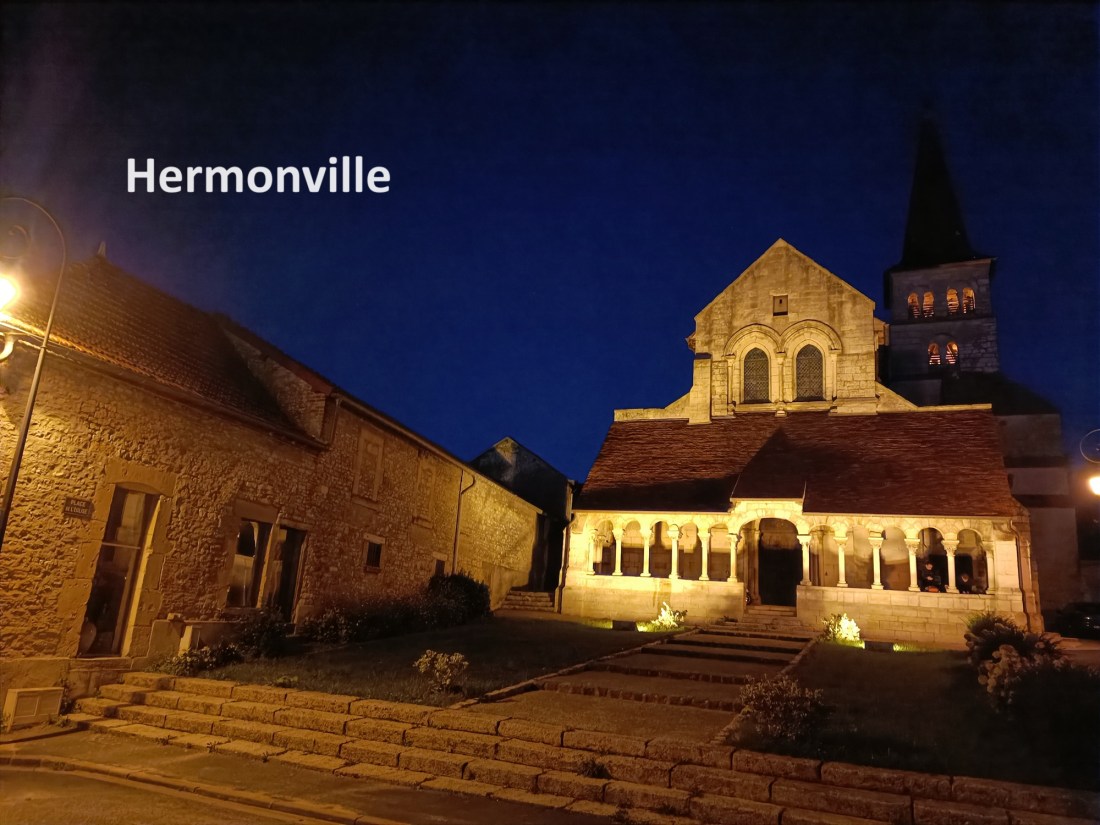
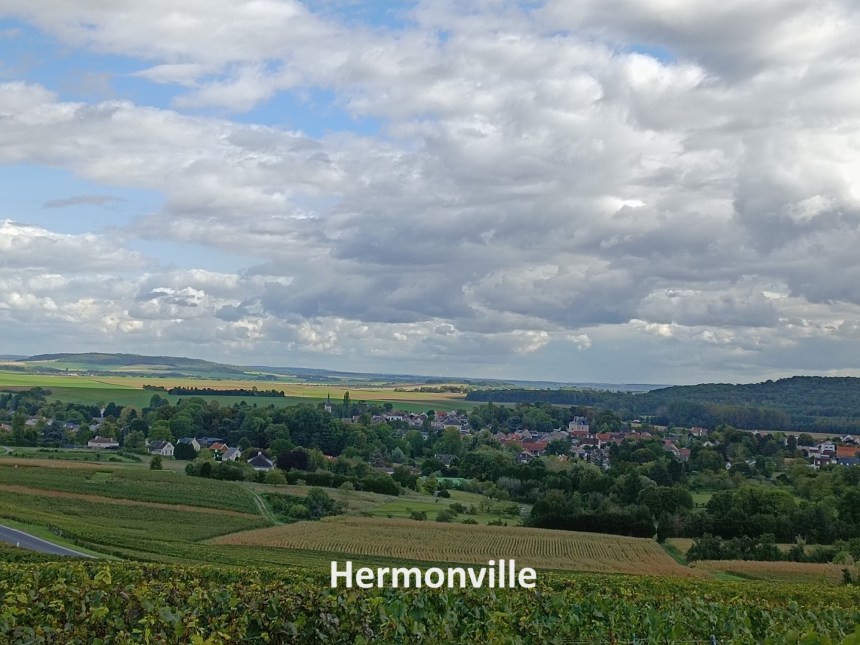
I had hoped to get lunch in Cormicy, but it was not to be; there was no restaurant open. I continued on along the trail as it took a circular sweep around to reach Hermonville. I was early for my accommodation, but too late for lunch. I found a place that was open, offering afternoon teas. While I was enjoying tea and cake, the proprietor approached me. Apparently the place offers B&B, and she was worried that I might be looking for accommodation there. She was sorry, but the place was fully booked, she explained. I told her that was not a problem, that I had booked elsewhere. She seemed relieved.
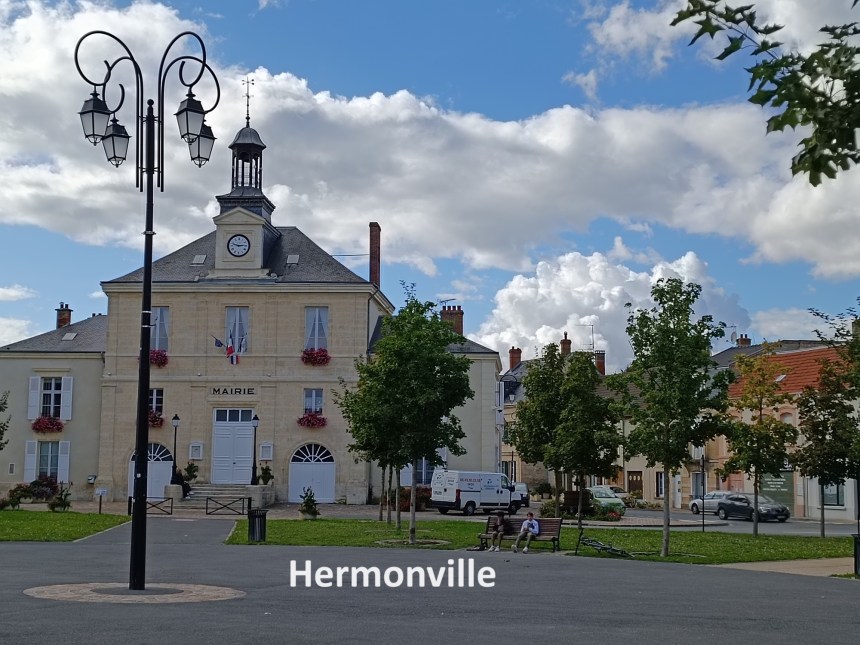
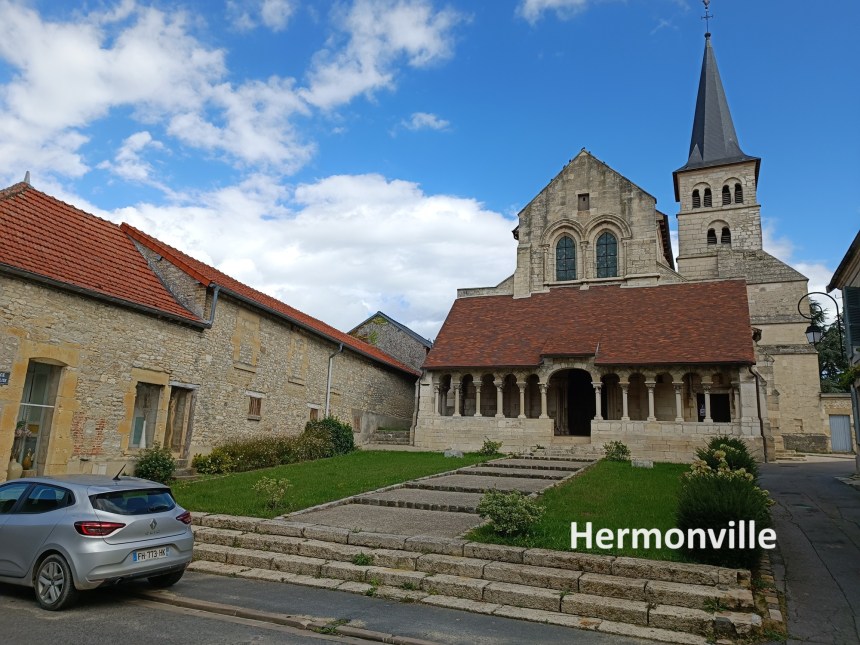
I went on to my accommodation, and checked in. After a shower and a short rest, it was time for dinner, so I went back to the centre of the village, where an excellent little pizzeria satisfied my needs. Thus refreshed, I went back to my accommodation, and slept well.


